 Painting (Pintura)
Painted in Color: The Ancient Science of Natural Dyes on Alpaca Textiles
A Canvas Older Than History Books
The story of color in Andean textiles begins not in a studio, but in the desert. At Huaca Prieta, an archaeological site along Peru's La Libertad coast, researchers uncovered what is now recognized as the world's oldest indigo-dyed textile — a fabric fragment dating back approximately 6,000 years. Long before the loom became a symbol of Andean civilization, dye knowledge was already being refined, passed between generations like a living inheritance.
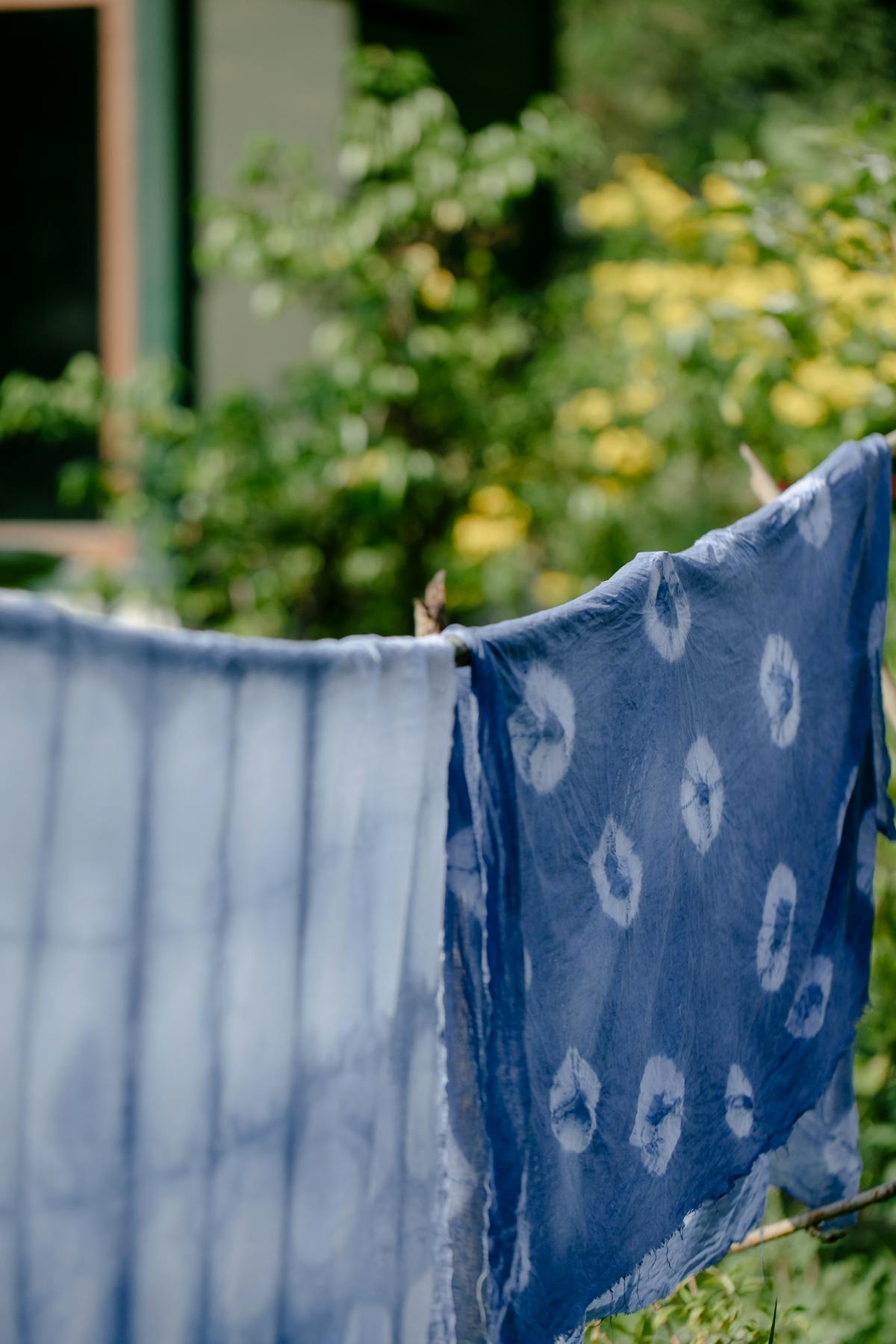
Today, that inheritance lives in the hands of artisans who practice textile painting — a technique distinct from woven pattern-making, in which natural dye solutions are applied directly onto prepared alpaca fiber or finished cloth using brushes, stamps, or resist methods. The result is a layered, painterly quality that no loom structure alone can produce.
Cochineal: Peru's Red Gold
No natural dye is more emblematic of Andean craft than cochineal (Dactylopius coccus), the tiny scale insect that produces one of history's most vivid crimson pigments. Originally domesticated in Oaxaca, Mexico, cochineal spread throughout South America before the Spanish conquest — evidence of its prized status long before European traders recognized its commercial value.
Its imprint on Peruvian craft is ancient and measurable. Cochineal residues have been identified in Paracas textiles more than 2,000 years old, some of the most technically sophisticated pre-Columbian fabrics ever excavated. According to MIDAGRI (Peru's Ministry of Agrarian Development), Peru now produces 85–95% of the world's cochineal supply, exporting more than 420 metric tons annually — an industry that employs over 32,000 people, many of them in highland communities with direct ties to ancestral textile traditions.
When applied in textile painting, cochineal behaves with scientific precision. Mordanting the fiber with alum, iron, or tin before painting shifts the final hue dramatically — from coral pink to deep burgundy to near-black — giving artisans a single insect-derived pigment capable of producing an entire tonal range.
Beyond Red: A Full Botanical Palette
Cochineal is only one note in a broader dye palette. Andean textile painters draw on a documented pharmacopoeia of plant-based pigments, many of which are catalogued in MINCETUR's official Manual de Tintes Naturales de Plantas Silvestres — a government reference that maps wild plant dye sources across Peru's ecological zones. Nogal (walnut hulls) yields rich tans and warm browns. Chinchircuma flowers produce golden yellows. Añil, the Andean cousin of indigo, bridges Peru's oldest dye tradition directly to contemporary practice.
In textile painting, these pigments are typically prepared as concentrated dye baths, then thickened with natural binders to control flow and prevent bleeding across fiber. The technique demands intimate knowledge of fiber behavior — which is where INACAL's quality standards become relevant. Peru's National Institute for Quality maintains NTP 231.303:2004 for alpaca fiber fineness classification and NTP 232.205:2015 for artisanal weaving standards, benchmarks that serious producers use to ensure consistency between natural dye uptake and fiber quality.
What Painting Reveals That Weaving Cannot
Painted alpaca textiles carry a visual vocabulary that differs fundamentally from woven ones. Gradients, free-form botanical motifs, and atmospheric washes of color are possible in painting that remain structurally impossible on a backstrap loom. Many artisans working in the Cusco and Ayacucho regions combine both: a woven base structure that anchors traditional geometric symbolism, with painted surface layers that introduce organic, expressive forms.
The resulting objects are simultaneously ancient and alive — products of science, ecology, and a dye tradition six millennia in the making.